Water spilling at the roof edge
Sagging gutters, missing sections, or water running behind the gutter can leave siding and trim exposed to concentrated runoff.
 EA Construction
Roofing contractor
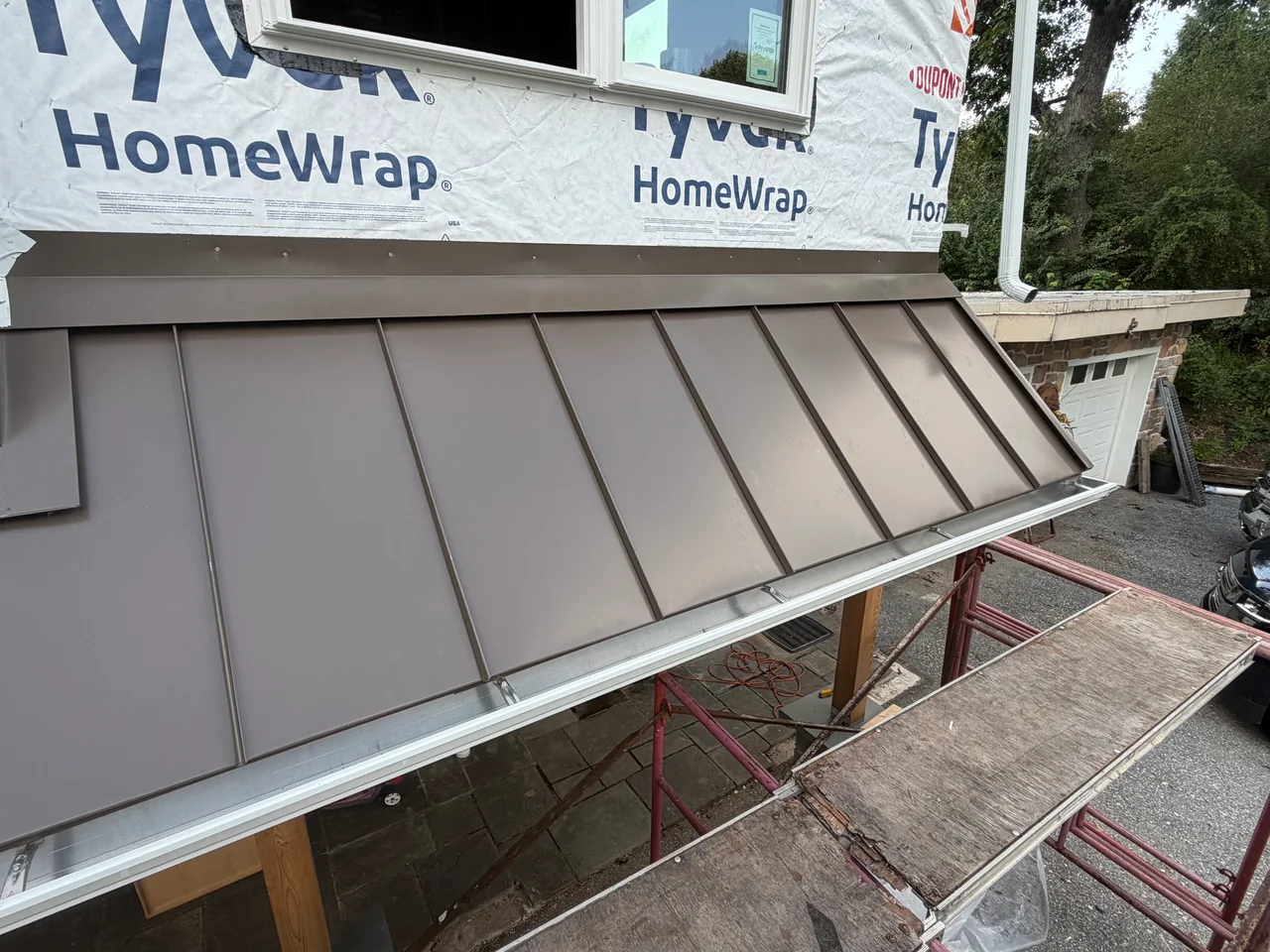
Keep rainwater from spilling against siding, washing out planting beds, or collecting beside your foundation. EA Construction & Roofing provides gutter installation, with planning that considers roof drainage, fascia condition, and where downspouts discharge.
Recognize the signs
New gutters may be worth discussing when seams keep leaking after debris is cleared, sections pull away from the fascia, or water repeatedly overflows during rain. The goal is a drainage layout suited to your roof and the ground around your home.
Sagging gutters, missing sections, or water running behind the gutter can leave siding and trim exposed to concentrated runoff.
Washed-out mulch and soil beneath the eaves can signal that runoff is not being collected or directed effectively.
Water collecting beside the house after rain is a reason to review downspout placement and discharge—not just replace the gutter runs.
From roof edge to ground
Gutter planning should consider the whole route from roof surface to discharge point. If roof repairs or roof replacements are also on your list, discuss how roof-edge work and gutter installation could be coordinated.
Consider which roof areas feed each gutter run, where drainage problems occur, and how access around the building could affect the installation plan.
Ask how fascia condition and roof-edge details could affect attachment, and whether any preparation or repairs need to be included in the scope.
Discuss gutter size, slope, outlets, and downspout locations. Include where water will discharge after reaching the ground, particularly near the foundation.
Ask what attachment and connection-sealing requirements apply to the selected system. Clarify whether a water-flow check is included and how drainage toward downspouts and away from the foundation would be evaluated.
Understand the scope
Free estimates are available. Ask for a scope that identifies gutter lengths, downspout locations, attachment details, and necessary preparation. When comparing proposals, check what each includes rather than comparing the total alone.
Total length, corners, separate runs, and the selected material, profile, and size affect the scope.
Building height, access, removal of old gutters, and fascia condition can change the preparation and installation work required.
The number and size of downspouts, their placement, and any included extensions or discharge connections also influence the estimate.
Local drainage considerations
In West Chester, Downingtown, Kennett Square, and surrounding communities, nearby trees can make seasonal leaf buildup an important planning consideration. Blocked outlets can interrupt drainage even when the gutter runs themselves appear sound.
Heavy rain makes capacity and discharge placement important, while winter freezing can worsen problems where water remains trapped. Your roof layout, tree cover, and property grading should guide the plan rather than a standard downspout arrangement.
A practical first step
During rain, observe from a safe ground-level location where water overflows, leaks behind gutters, or pools near downspouts. Photos of those areas can help explain the problem when you enquire.
Do not climb onto a wet roof or try to adjust elevated gutters yourself. Contact EA Construction & Roofing with your property location, the issues you have noticed, and any related roofing plans to discuss a free estimate.
A little more clarity
Sizing depends on the roof area draining into each gutter run, the roof layout, and the number and placement of outlets and downspouts. The length of the roof edge alone does not establish the drainage capacity you need.
Reuse depends on their condition, size, compatibility with the selected gutter system, and location. Existing downspouts may not suit a revised drainage layout, so include them in the assessment rather than assuming they will remain.
Loose or deteriorated fascia may need repair before gutters can be securely attached. Checking it before installation helps identify preparation work that should be included in the estimate.
Discharge should direct water away from the foundation without creating pooling on walkways, sending runoff onto neighboring property, or concentrating water in low areas. Suitable locations depend on your property's grading and drainage layout.
If both are planned, discuss the sequence together. Roof-edge work can affect gutter attachments and runoff connections, so coordinating the scope helps avoid disturbing newly installed components.
Talk through the details
Describe your roofing concern or planned project, include your property's location and share any useful observations. Request a free estimate to begin the conversation. Appointments are required.
Request a free estimate