
Storm Damage Repair in Hamorton: Putting Together Your Roof’s History
Build a useful roof history from existing photos, invoices and notes, even when you do not know the roof’s condition before a storm.

Start with a roof history, not a conclusion
Preparing for storm damage repair in Hamorton can be confusing when you do not know exactly what your roof looked like beforehand. Perhaps you recently bought the house, inherited incomplete paperwork, or noticed a ceiling mark only after heavy rain. You do not need to reconstruct every year of the roof’s life. A short, honest history can make the conversation clearer by showing what is documented, what has changed and what remains unknown.
Storm damage repair discussions benefit from records that provide context without trying to establish a cause. Think of your folder as background information, not a diagnosis: an invoice identifies past work, a photograph captures a visible condition, and a dated note records when you noticed something. None automatically explains why a current problem developed. Keep those distinctions clear throughout the file.
Gather records without overstating what they prove
Begin with documents already within reach: installation paperwork, paid repair invoices, purchase inspection reports, product labels and photographs saved on old phones. Put copies in one digital folder or paper file. Keep proposals separate from completed-work records, because a proposed replacement or repair does not prove that work happened. If an invoice describes only the garage roof, do not apply its date to the main house.
Record material names exactly as the paperwork gives them, including any manufacturer, product line or color. Do not guess a product from appearance alone. Our guide to three-tab and architectural shingles offers background for understanding those descriptions. Older color-selection paperwork may also help identify a named product; the article on choosing shingle colors explains why samples and appearance deserve care. Neither resource establishes which material is currently on your roof.
Make dates and sources easy to follow
Build a simple timeline with three details for each entry: the date, the source and what it actually says or shows. For example, “June 2021, paid invoice, repair beside rear chimney” is more useful than “roof fixed in 2021.” If a date is approximate, label it that way. Keep the date work occurred separate from the date a bill was issued whenever both are available.
Photographs need similar care. A file’s download date may not be its capture date, and a screenshot can lose the original context. Preserve original files where possible, then make clearly labeled working copies. A family photograph showing part of the house can still help, but note its limitations: “front slope visible at a distance” is accurate; “entire roof in good condition” goes beyond what that picture can establish.
- Exact date when known; approximate date when uncertain.
- Source document or original photograph filename.
- Specific roof area and limited observation.
- Open question that the record does not answer.
Give each photograph a recognizable location
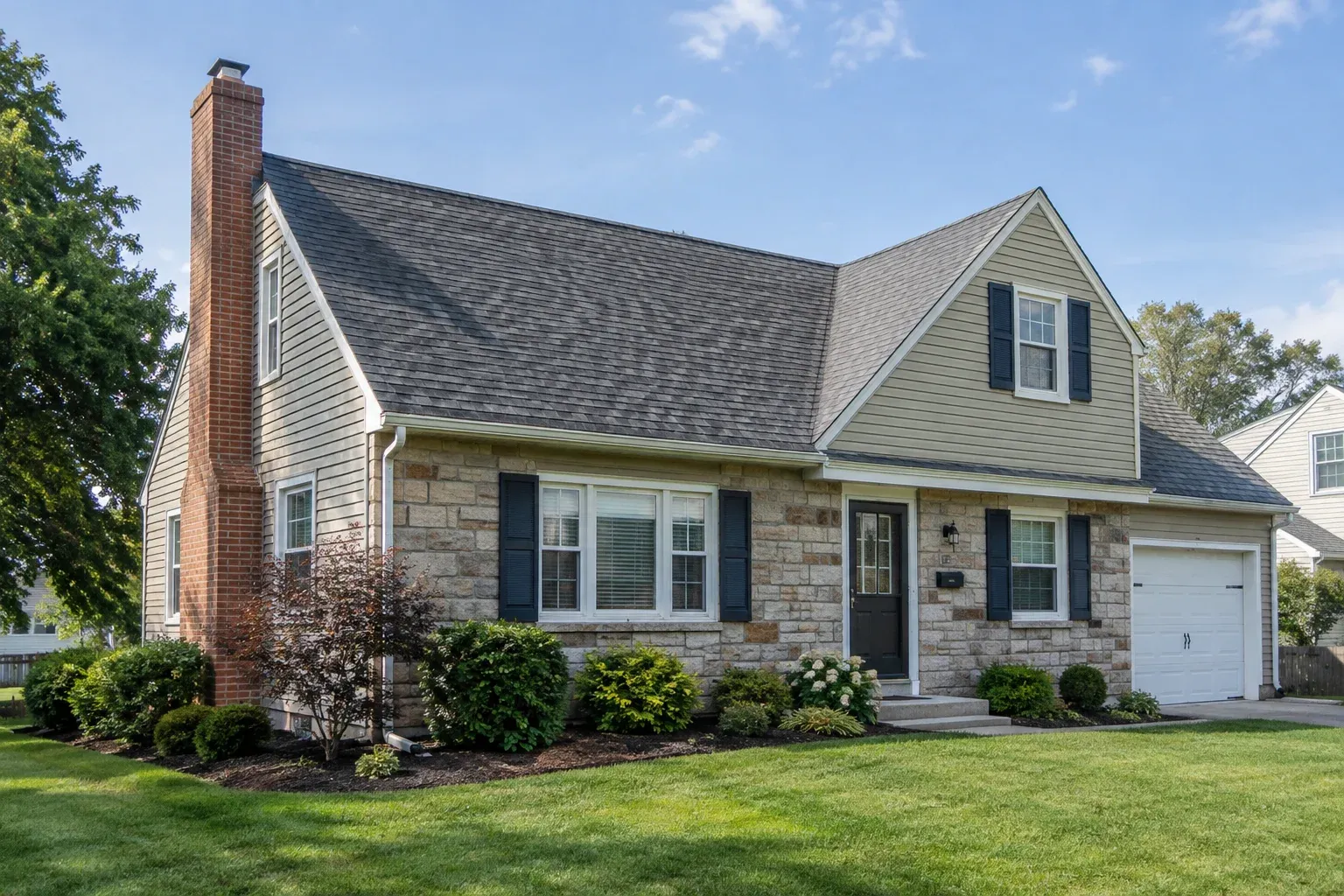
Use consistent location names so older and newer records can be compared. “Rear slope above kitchen” is easier to follow than “bad area.” A simple house outline can identify the front entrance, garage, chimney and addition without requiring measurements. For a small office or rental property, a property manager can use the same approach to connect tenant reports with particular rooms and exterior roof areas.
Only take new exterior photographs when conditions are safe, from accessible ground-level positions. The National Weather Service’s guidance after severe weather says to confirm the threat has ended, avoid damaged buildings and contact local authorities about downed power lines. Do not move closer to hazards for a clearer image. A broad house view is useful because it establishes location, even when it cannot show the condition of individual shingles.

Separate what you noticed from what caused it
Describe newly noticed conditions in plain language. Write “brown ceiling mark first noticed Monday evening” rather than “storm caused roof leak Monday.” If you have an earlier photograph of the same ceiling, include it; otherwise, say the previous condition is undocumented. GAF’s roof-damage overview notes that ceiling staining can involve outside leaks or moisture trapped inside, which is one reason a visible symptom should not become a confident explanation.
Keep observations and interpretations in separate sentences. “No missing shingles visible from the driveway” describes your viewpoint, not the whole roof. The related explanation of why a roof can leak without missing shingles provides context for that limitation. Likewise, a mark visible after a storm may be newly noticed rather than newly formed. Preserve that uncertainty instead of filling the gap with a likely-sounding story.
Label gaps instead of trying to fill them
An incomplete history is still useful if its gaps are visible. Write “installation year unknown” or “previous owner reported repair; invoice unavailable.” If two documents conflict, keep both and flag the discrepancy. Do not average dates or choose the version that sounds more reassuring. A note identifying uncertainty helps prevent an estimate about age or past work from becoming an established fact through repetition.
Preserve older product information even if the original shingle may no longer be available. The discussion of discontinued original shingles explains why identifying an existing material can matter later. For now, your task is simply to retain labels, invoices and any reliable product references. Do not discard an old receipt because its color name seems unfamiliar or because a newer patch looks different.
Bring a concise summary to the conversation
Finish with a one-page summary supported by the original records. Include known installation information, documented repair locations, newly noticed changes and unanswered questions. Select a few useful photographs rather than sending dozens of nearly identical images. Ask how historical information relates to current findings without expecting old paperwork to settle the repair decision. The guide to what a repair scope should explain addresses that separate next-stage conversation.
For storm damage repair in Hamorton, the goal is a clear starting point, not a perfect archive. Keep original records, describe observations precisely and leave unknowns visible. Do not postpone seeking help for active water entry or apparent structural concerns while searching for paperwork. A modest, well-organized roof history can support a more focused discussion without claiming to prove the roof’s previous condition or the cause of a current problem.
Frequently asked questions
What if I have no photographs from before the storm?
Start with whatever dated material you already have, including purchase records, repair invoices and ordinary exterior photographs. Identify areas with no earlier record as unknown rather than assuming they were undamaged.
Does an old repair invoice prove the roof was in good condition?
No. It documents the work described, subject to the detail it contains. A localized repair invoice does not establish the condition of every roof section or prove how long the repair remained effective.
Should I finish organizing records before seeking help for an active problem?
No. Records are supporting information, not a prerequisite for seeking help. Prioritize safety and prompt professional attention for active water entry or apparent structural concerns; provide additional records afterward.